Captain's Post #26 - Engine Failure!!! Mx Hold
By Larry McCullough
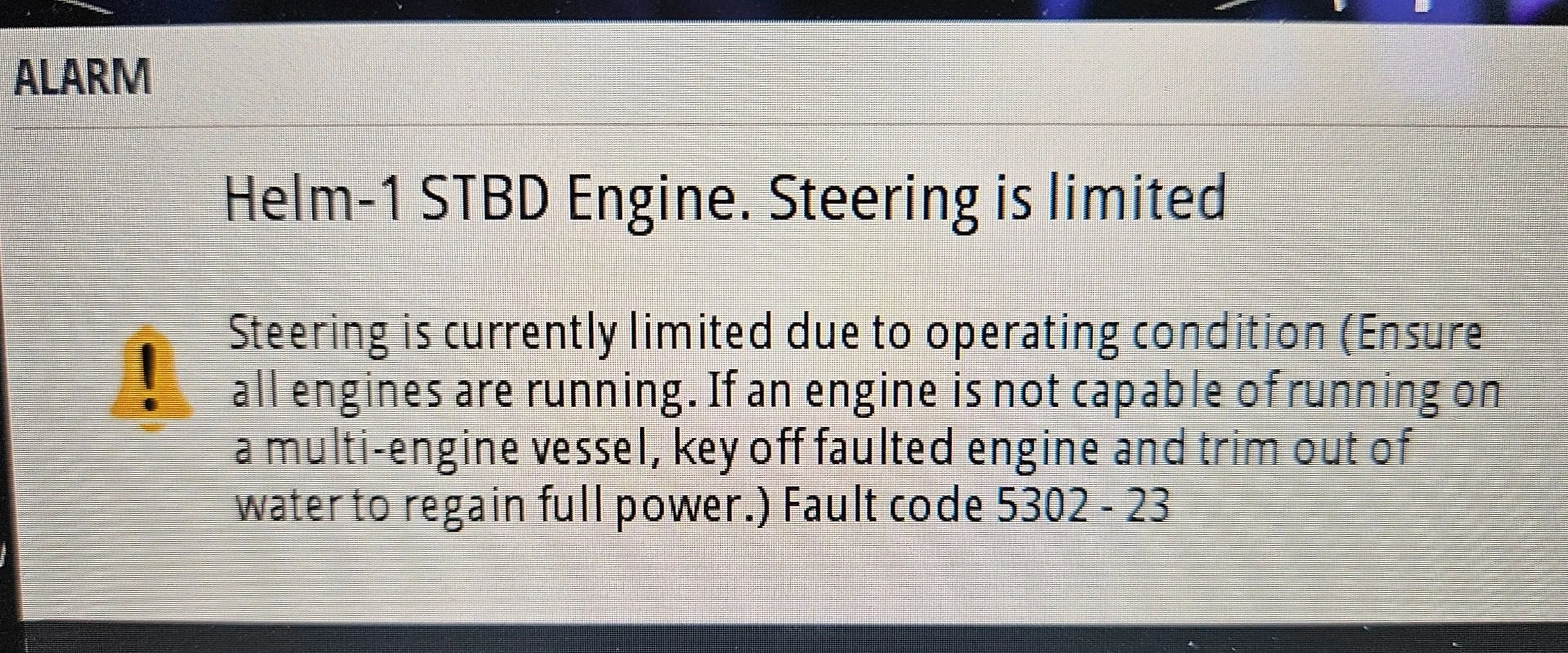
Fifty miles to the destination, on one engine, in bad weather conditions?!? That is not good…
I was reading a story in the Wall Street Journal recently and it was about a entrepreneur who was selling some houses in California. He was counting on some new billionaire to buy his multi million dollar houses with their newly printed money from selling stock. The gentleman said, in reference to buying and renovating houses - it’s like buying a yacht…the first year is spent finding the problems and fixing them. Well, I am hoping it doesn’t take a year.
The weather forecast for leaving Wrangell was calling for the waves to build in the late morning to an uncomfortable chop in the open waters in Ernest Sound and Clarence Strait on the approach to Ketchikan. Keith and Chris were probably thinking I was being overly cautious about the conditions until the night before when we were at a local pub and some people were talking about the water conditions, “You wouldn’t have wanted to be out there then”. This made me feel better.
Back to the problems. When there is a bit of a chop, I must say, this boat eats it up. For a 35 foot boat , it weighs a lot, 18,000 pounds. Here in Ketchikan I have had conversations with a captain that has been taking people on his boat, a 30 footer, and he says it weighs 8,000 pounds. Life Proof builds boats for the Coast Guard and military therefore they have to be able to take a beating and handle the waves. BUT, you have to be moving. With about 48 miles into our 98 mile cruise to Ketchikan from Wrangell an alarm went off, “STBD Engine, Steering is limited…blah blah blah”. This is not good, the voltage on the starboard engine is dropping, I quickly learn that when it goes below 10.9 volts the engine shuts down. When the engine shuts down the other engine gets very grumpy and worries that the lower units might touch each other (on these outboard engines the entire motor does not move, just the lower unit, that is how it steers and allows the motors to be mounted very close to each other). When this happens I need to raise the troubled engine out of the water and then the other engine will respond, but it didn’t respond and the boat was starting to wallow in the water. I was only able to get the boat going at a maximum speed of 8 mph, distance 49.7 with the seas worsening, not good, over 6 hours at this speed to Ketchikan - did Chris take his Ginger pills this morning?!?
One of my options on the Garmin engine screens shows the electrical gauges for the boat. I turn that on and I think…what if I hit the parallel switch, which ties all the batteries together? I call the project manager of the build of our boat at Life Proof and leave a message describing what happened and hang up. He texted me back (the younger generation!), and tells me to trim/raise the starboard engine upwards. He also tells me I can parallel the batteries, I contemplate the instructions and realize I don’t want to puke while digging around to find the switches he is referring to. I reboot the electronics and hit the parallel switch that is next to the helm and I learn quickly, for safety reasons, I will have to do this about every four minutes on our way back to Ketchikan. All the batteries are not connected together, so that in case you are anchored and you use all your “house” batteries, you can start the boat in the morning as the engine batteries are separate.
I am able to get the boat going and we are flying across the top of the chop at between 35 and 40 mph, we can beat the incoming weather I am thinking. I am also getting my squats in as I have to bend down and hit the “parallel” switch every 4 minutes. I am also noticing that the house batteries and the port engine batteries are being drawn down, this can not go on for a long time.
We make it into the Ketchikan marina before the afternoon winds make the conditions worse, which therefore did not make Chris’s condition worse. Plug the boat into shore-power and off to show them the town.
The next morning I am texting again with the Life Proof project manager and he is trying to guide me through various ways of finding the problem using my volt meter, testing many, but not all, (remember that for later) fuses. I did find one fuse that was related to the engine that was blown but I learn later that was not the problem. I turn on the motor and it looks fine, 14.1 volts, I fixed it! Nope…
The boys leave and the Admiral, Jamie, returns. We had read and heard about what a beautiful cruise it is around the island, Revillagigedo, that Ketchikan is on. The Misty Fjord National Wilderness is part of this beautiful area. We decide we are going to do the trip over several days, we untie the lines and start our latest journey. We don’t get far, the voltage on the starboard motor starts to drop just like before. I later learn that the reason why it was higher when I tested it earlier was because the boat was plugged into shore-power and the battery charger was keeping the volts up.

Big problems call for big (and NYC priced) donuts!
Back to the dock and another plea to Life Proof. The next morning was Monday, Jamie and I walked the short distance to the local Mercury dealer, BUT FIRST, Jamie had the great idea to get donuts. We show up with 2 boxes of donuts from Jellyfish Donuts (they even have a maple bacon donut which we included) and were greeted with smiles and laughter but more importantly a promise that a tech would show up later in the day to check things out. The CEO from Life Proof calls me, just after the donut delivery, and on the line is there tech guy who is planning on flying to Ketchikan later in the day with a new alternator but first, they walk me through checking the electrical components that are connected to the motor but not attached to it, like the Project Manager did. With some additional phone calls it was thought best to see what the local Mercury tech comes up with. At 6 pm the tech shows up and determines that the alternator is not putting out power, needs a new one.
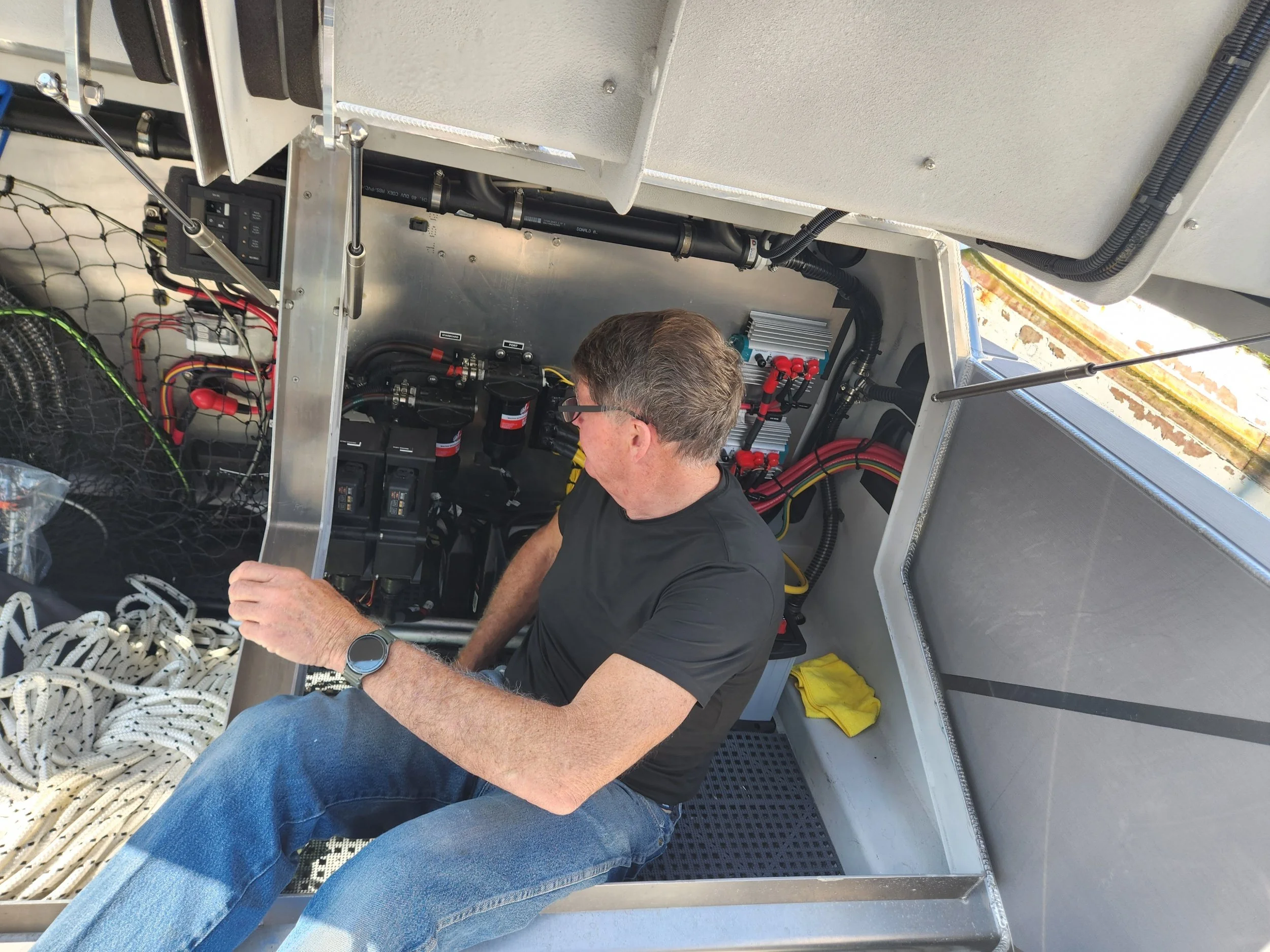
Boat yoga, AKA boat maintenance, never easy for tall guys. Checking the electrical that runs to the engines.
Mercury jumps on it and a new one is “overnighted”, which means up here a two day delivery. Thursday the alternator is delivered for a Friday installation. Jamie and I start making plans to get cruising again. The tech arrives, takes off the top cover of the engine and then what is called the “cowling”, the lower cover that goes around the engine that requires several bolts to removed with an extension. The cowling weighs about 40 pounds. The alternator is installed and it is still showing that it is not putting out volts!!! I asked, did you check the fuses? “They look fine” was the reply. These fuses are only accessible with the cowling off and are behind a plastic cover. The tech puts the cover back on and goes back to his shop.
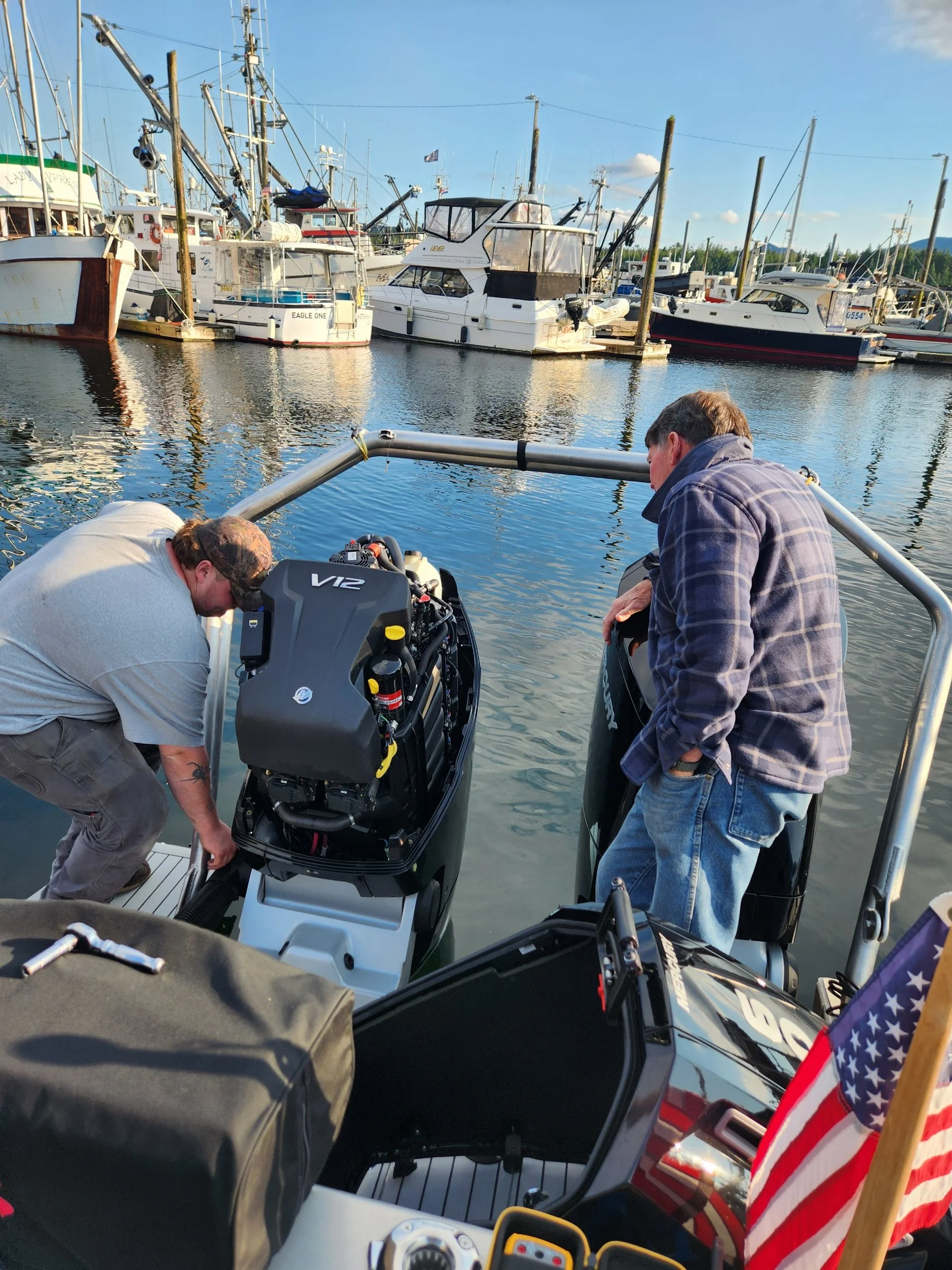
Day one of attempting to isolate the problem with the engine
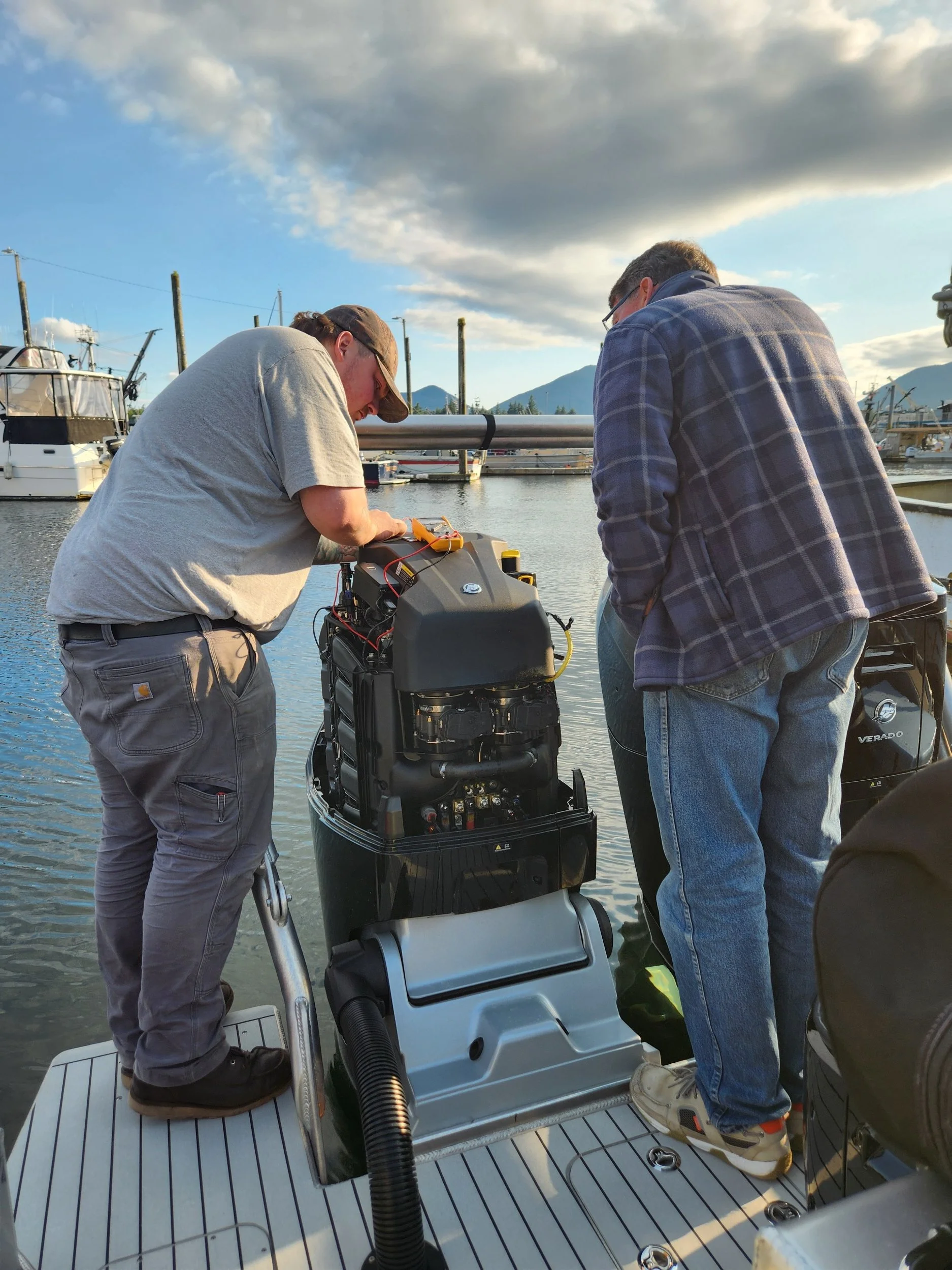
At this point, all signs point to the alternator
I have more texts with Life Proof and I am questioned, did he test the fuse. I didn’t know, he said they looked fine. I called him later and he said he did not test them. Jamie and I are getting a bit stir crazy, Ketchikan is a great little town but we have had enough, how long are we going to be stuck here? As a reminder, this is the same place the inverter stopped working.

I (Jamie) am picking out my plot at the local cemetery….as it looks like I will die in Ketchikan before the boat gets fixed!!!
I show up at the Mercury dealers shop at their opening at 9:00AM on Saturday, hoping the tech would come or I was going to attempt to take the cowling off and test the fuses myself. He said he would be at the boat at 11:30AM. He shows up, pulls the cowling, “tests” the fuse with a voltmeter and sure enough it was blown. The alternator was fine all along. We are off to Misty Fjords to one of the most beautiful spots on our entire trip the next day.
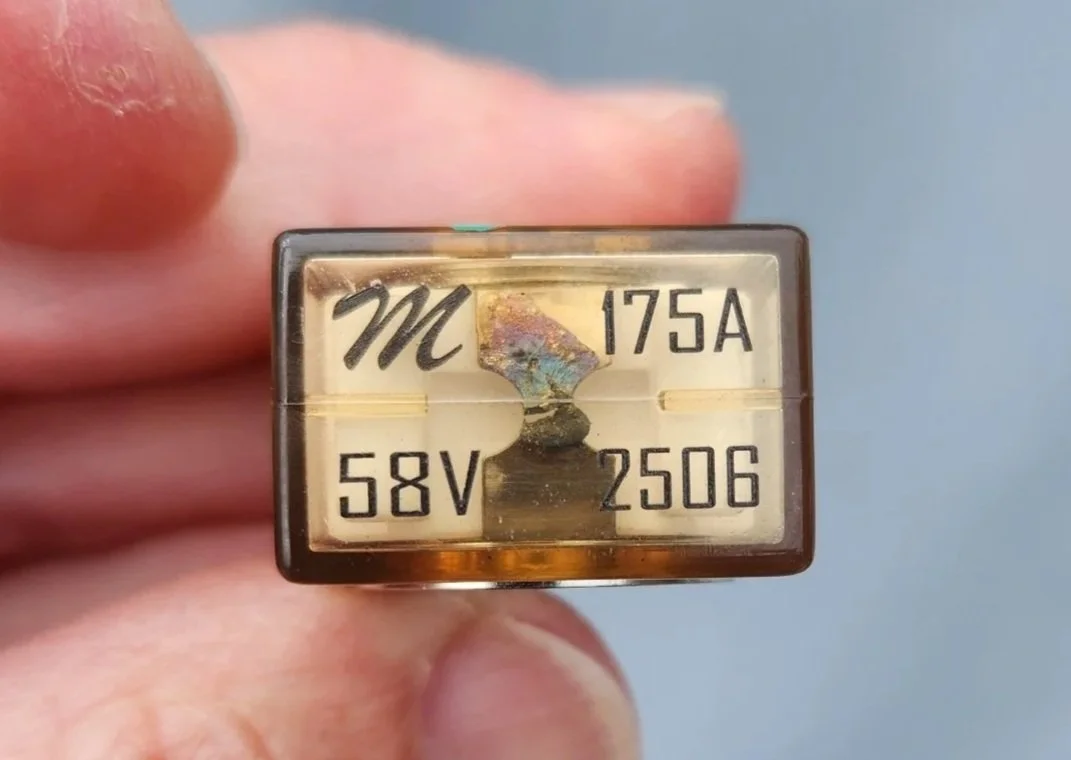
This blown fuse was the problem the whole time!!!
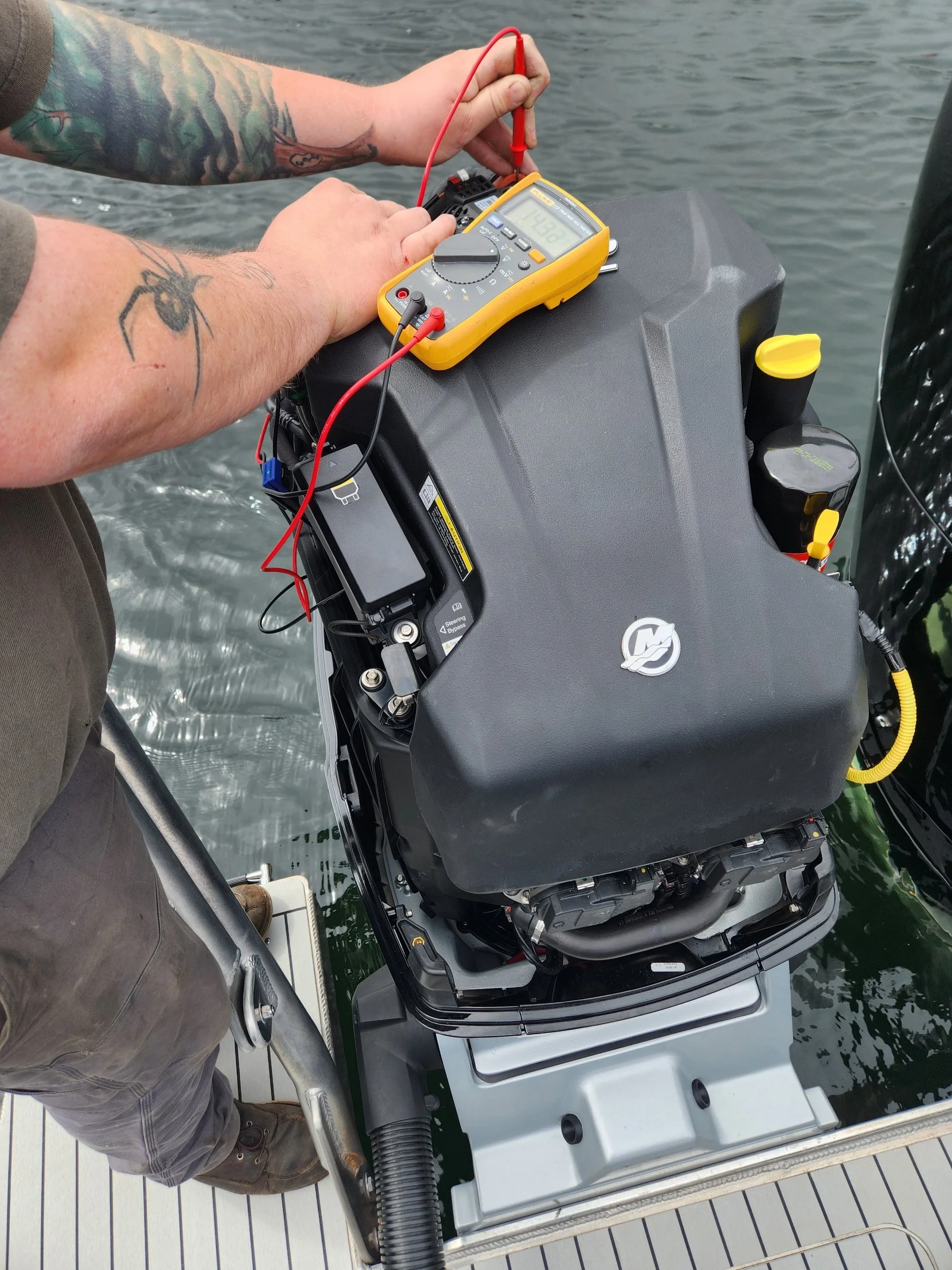
Success!!! Maintaining 14 volts at the alternator with shore power off. We are out of here!!!